SPEECHTEXTER
...

1filmy4wap Club !!exclusive!! -

The proliferation of digital platforms has revolutionized media consumption, but it has also given rise to illegal websites that threaten the creative industry. Among these, has emerged as a notorious hub for pirated content, offering free downloads of movies, TV shows, and web series. While such platforms attract users seeking cost-free entertainment, their operation rests on flagrant violations of intellectual property laws, causing significant economic and ethical repercussions. This essay critically examines the legal, ethical, and societal dimensions of 1filmy4wap club, emphasizing why its usage undermines the entertainment ecosystem. The Illegality of Piracy and Copyright Infringement 1filmy4wap club functions by illegally reproducing and distributing copyrighted content without authorization from creators or distributors. In most jurisdictions, including India under the Copyright Act, 1957, and internationally via treaties like the Berne Convention, such actions constitute criminal offenses. The website typically hosts leaked versions of newly released films, often recorded in theaters via camcorders or obtained through insider breaches. By making this content freely accessible, 1filmy4wap club deprives rights holders—ranging from independent filmmakers to major studios—of legitimate revenue from box office sales, streaming subscriptions, and digital purchases. Governments have periodically blocked the site, but it evades sanctions by frequently changing domain extensions (e.g., .club, .com, .in) and mirroring content on new URLs, demonstrating a deliberate and organized defiance of law. Economic Damage to the Film Industry The financial impact of piracy via sites like 1filmy4wap club is staggering. A 2021 report by the US Chamber of Commerce estimated that global online piracy costs the film and television industry at least $29 billion annually in lost revenue. For a film-dependent economy like India—which produces over 1,500 movies per year—piracy directly threatens livelihoods. Small-budget and independent films are especially vulnerable; when their content appears on 1filmy4wap within hours of release, potential viewers bypass paid platforms, leading to box office failures. This loss cascades through the supply chain: reduced profits mean fewer future productions, layoffs for crew members, diminished investment in new talent, and lower quality in special effects or storytelling. In extreme cases, producers have abandoned projects due to anticipated piracy losses, stifling cultural output. Ethical Concerns and Consumer Complicity Beyond legality, using 1filmy4wap club raises ethical questions. While some users rationalize piracy due to high subscription costs or regional unavailability of content, these excuses ignore the principle of fair compensation. Filmmaking involves hundreds of professionals—actors, writers, technicians, and laborers—who rely on legal distribution for their income. By downloading from 1filmy4wap, consumers become complicit in devaluing creative labor. Moreover, such sites often embed malicious advertisements, spyware, or phishing links, exploiting users’ devices for illicit profit. Thus, the “free” content carries hidden risks, both moral and digital. Ethical alternatives include ad-supported legal platforms (e.g., MX Player, Tubi), library borrowing services, or discounted subscription tiers, which balance affordability with respect for intellectual property. Legal Enforcement and Technological Challenges Despite legal action, 1filmy4wap club persists due to jurisdictional loopholes and technological countermeasures. Authorities issue takedown notices under the Digital Millennium Copyright Act (DMCA) and its Indian counterpart, the Information Technology Act, 2000. Internet service providers (ISPs) are ordered to block the site, but operators quickly register new domain names or host content on decentralized servers abroad. Proving criminal intent is difficult when site owners hide behind proxy servers or anonymous registrars. Consequently, enforcement relies heavily on public awareness campaigns and automated anti-piracy tools like content fingerprinting. However, a sustainable solution requires international cooperation, stricter domain regulation, and consumer education—efforts that remain inconsistent across nations. Conclusion 1filmy4wap club exemplifies the dark underbelly of digital piracy: an illegal, ethically bankrupt platform that undermines the creative economy while exposing users to cybersecurity threats. Though it offers temporary financial relief for some viewers, its cumulative damage—lost jobs, reduced artistic risk-taking, and erosion of copyright norms—far outweighs any perceived benefit. Addressing this issue demands a multipronged approach: stronger legal frameworks, affordable legal alternatives, and a cultural shift in how audiences value intellectual property. Until then, each visit to 1filmy4wap club is not a victimless act but a blow against the very industry that produces the stories we love. Choosing legal channels is not merely obeying the law—it is investing in the future of cinema.

SpeechTexter is a free multilingual speech-to-text application aimed at assisting you with transcription of notes, documents, books, reports or blog posts by using your voice. This app also features a customizable voice commands list, allowing users to add punctuation marks, frequently used phrases, and some app actions (undo, redo, make a new paragraph).

SpeechTexter is used daily by students, teachers, writers, bloggers around the world.

It will assist you in minimizing your writing efforts significantly.

Voice-to-text software is exceptionally valuable for people who have difficulty using their hands due to trauma, people with dyslexia or disabilities that limit the use of conventional input devices. Speech to text technology can also be used to improve accessibility for those with hearing impairments, as it can convert speech into text.

It can also be used as a tool for learning a proper pronunciation of words in the foreign language, in addition to helping a person develop fluency with their speaking skills.
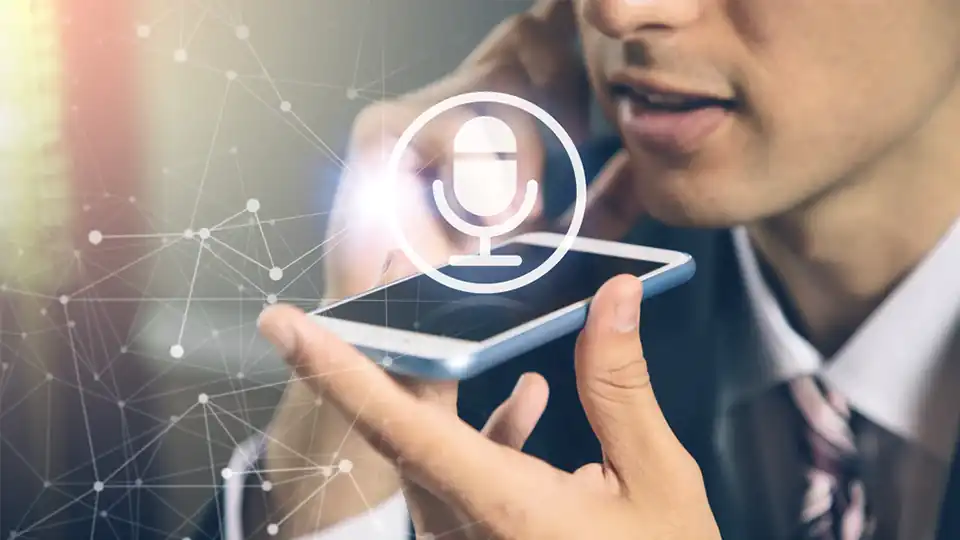
using speechtexter to dictate a text

Accuracy levels higher than 90% should be expected. It varies depending on the language and the speaker.

No download, installation or registration is required. Just click the microphone button and start dictating.

Speech to text technology is quickly becoming an essential tool for those looking to save time and increase their productivity.
Features

Powerful real-time continuous speech recognition

Creation of text notes, emails, blog posts, reports and more.

Custom voice commands

More than 70 languages supported

Technology

SpeechTexter is using Google Speech recognition to convert the speech into text in real-time. This technology is supported by Chrome browser (for desktop) and some browsers on Android OS. Other browsers have not implemented speech recognition yet.

Note: iPhones and iPads are not supported

List of supported languages:

Afrikaans, Albanian, Amharic, Arabic, Armenian, Azerbaijani, Basque, Bengali, Bosnian, Bulgarian, Burmese, Catalan, Chinese (Mandarin, Cantonese), Croatian, Czech, Danish, Dutch, English, Estonian, Filipino, Finnish, French, Galician, Georgian, German, Greek, Gujarati, Hebrew, Hindi, Hungarian, Icelandic, Indonesian, Italian, Japanese, Javanese, Kannada, Kazakh, Khmer, Kinyarwanda, Korean, Lao, Latvian, Lithuanian, Macedonian, Malay, Malayalam, Marathi, Mongolian, Nepali, Norwegian Bokmål, Persian, Polish, Portuguese, Punjabi, Romanian, Russian, Serbian, Sinhala, Slovak, Slovenian, Southern Sotho, Spanish, Sundanese, Swahili, Swati, Swedish, Tamil, Telugu, Thai, Tsonga, Tswana, Turkish, Ukrainian, Urdu, Uzbek, Venda, Vietnamese, Xhosa, Zulu.

Instructions for web app on desktop (Windows, Mac, Linux OS)


Requirements: the latest version of the Google Chrome [↗] browser (other browsers are not supported).

1. Connect a high-quality microphone to your computer.

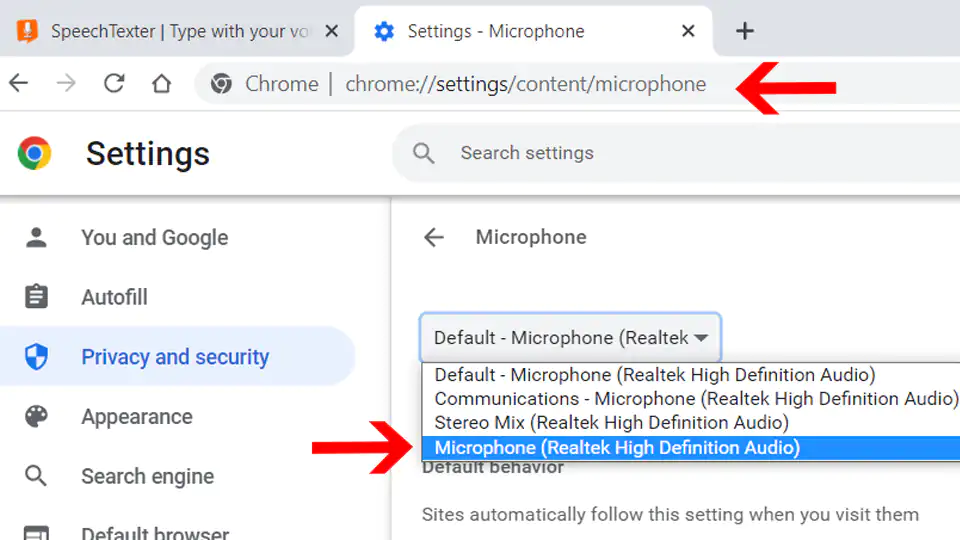
2. Make sure your microphone is set as the default recording device on your browser.

To go directly to microphone's settings paste the line below into Chrome's URL bar.

chrome://settings/content/microphone


Set microphone as default recording device

To capture speech from video/audio content on the web or from a file stored on your device, select 'Stereo Mix' as the default audio input.

3. Select the language you would like to speak (Click the button on the top right corner).

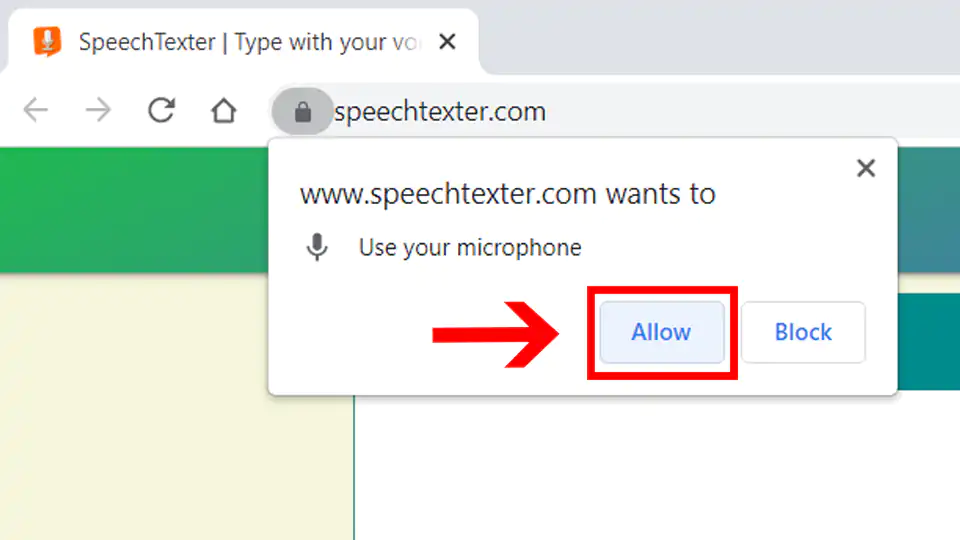
4. Click the "microphone" button. Chrome browser will request your permission to access your microphone. Choose "allow".

Allow microphone access

5. You can start dictating!

Instructions for the web app on a mobile and for the android app (the android app is no longer supported)


Requirements:
- Google app [↗] installed on your Android device.
- Any of the supported browsers if you choose to use the web app.

Supported android browsers (not a full list):
Chrome browser (recommended), Edge, Opera, Brave, Vivaldi.

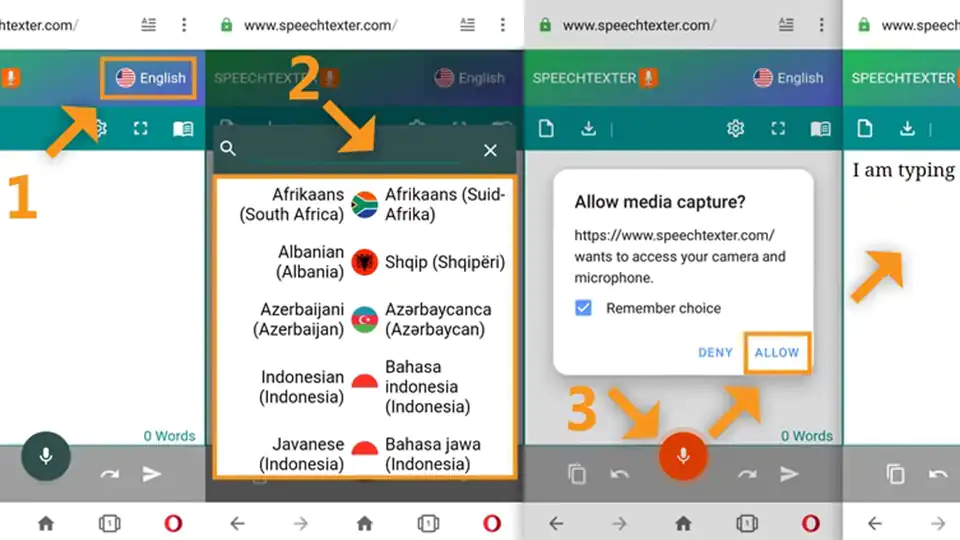
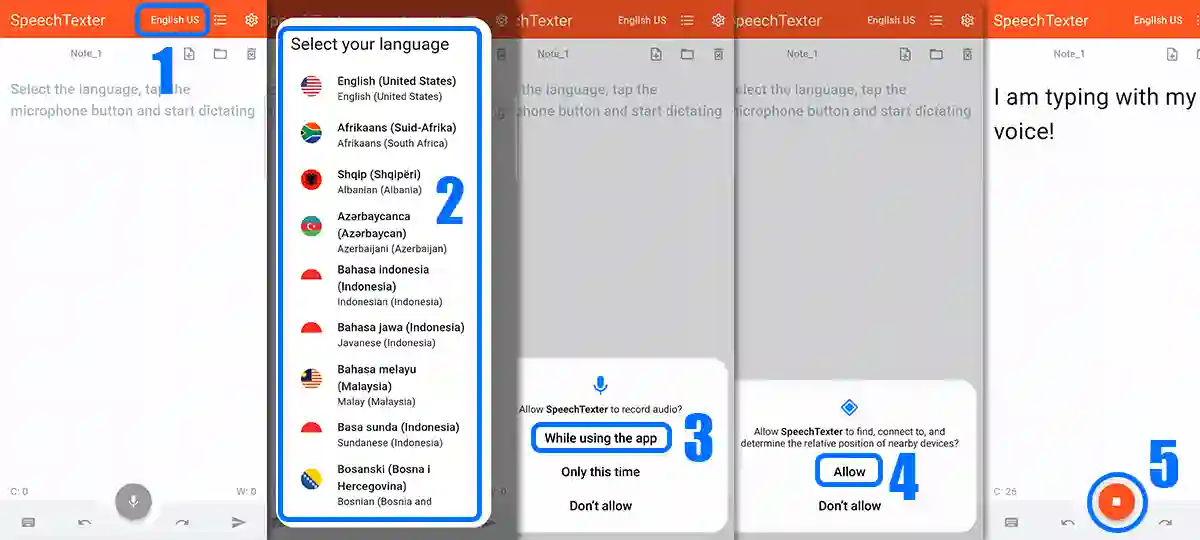
1. Tap the button with the language name (on a web app) or language code (on android app) on the top right corner to select your language.

2. Tap the microphone button. The SpeechTexter app will ask for permission to record audio. Choose 'allow' to enable microphone access.

instructions for the web app
web app

instructions for the android app
android app

3. You can start dictating!

The proliferation of digital platforms has revolutionized media consumption, but it has also given rise to illegal websites that threaten the creative industry. Among these, has emerged as a notorious hub for pirated content, offering free downloads of movies, TV shows, and web series. While such platforms attract users seeking cost-free entertainment, their operation rests on flagrant violations of intellectual property laws, causing significant economic and ethical repercussions. This essay critically examines the legal, ethical, and societal dimensions of 1filmy4wap club, emphasizing why its usage undermines the entertainment ecosystem. The Illegality of Piracy and Copyright Infringement 1filmy4wap club functions by illegally reproducing and distributing copyrighted content without authorization from creators or distributors. In most jurisdictions, including India under the Copyright Act, 1957, and internationally via treaties like the Berne Convention, such actions constitute criminal offenses. The website typically hosts leaked versions of newly released films, often recorded in theaters via camcorders or obtained through insider breaches. By making this content freely accessible, 1filmy4wap club deprives rights holders—ranging from independent filmmakers to major studios—of legitimate revenue from box office sales, streaming subscriptions, and digital purchases. Governments have periodically blocked the site, but it evades sanctions by frequently changing domain extensions (e.g., .club, .com, .in) and mirroring content on new URLs, demonstrating a deliberate and organized defiance of law. Economic Damage to the Film Industry The financial impact of piracy via sites like 1filmy4wap club is staggering. A 2021 report by the US Chamber of Commerce estimated that global online piracy costs the film and television industry at least $29 billion annually in lost revenue. For a film-dependent economy like India—which produces over 1,500 movies per year—piracy directly threatens livelihoods. Small-budget and independent films are especially vulnerable; when their content appears on 1filmy4wap within hours of release, potential viewers bypass paid platforms, leading to box office failures. This loss cascades through the supply chain: reduced profits mean fewer future productions, layoffs for crew members, diminished investment in new talent, and lower quality in special effects or storytelling. In extreme cases, producers have abandoned projects due to anticipated piracy losses, stifling cultural output. Ethical Concerns and Consumer Complicity Beyond legality, using 1filmy4wap club raises ethical questions. While some users rationalize piracy due to high subscription costs or regional unavailability of content, these excuses ignore the principle of fair compensation. Filmmaking involves hundreds of professionals—actors, writers, technicians, and laborers—who rely on legal distribution for their income. By downloading from 1filmy4wap, consumers become complicit in devaluing creative labor. Moreover, such sites often embed malicious advertisements, spyware, or phishing links, exploiting users’ devices for illicit profit. Thus, the “free” content carries hidden risks, both moral and digital. Ethical alternatives include ad-supported legal platforms (e.g., MX Player, Tubi), library borrowing services, or discounted subscription tiers, which balance affordability with respect for intellectual property. Legal Enforcement and Technological Challenges Despite legal action, 1filmy4wap club persists due to jurisdictional loopholes and technological countermeasures. Authorities issue takedown notices under the Digital Millennium Copyright Act (DMCA) and its Indian counterpart, the Information Technology Act, 2000. Internet service providers (ISPs) are ordered to block the site, but operators quickly register new domain names or host content on decentralized servers abroad. Proving criminal intent is difficult when site owners hide behind proxy servers or anonymous registrars. Consequently, enforcement relies heavily on public awareness campaigns and automated anti-piracy tools like content fingerprinting. However, a sustainable solution requires international cooperation, stricter domain regulation, and consumer education—efforts that remain inconsistent across nations. Conclusion 1filmy4wap club exemplifies the dark underbelly of digital piracy: an illegal, ethically bankrupt platform that undermines the creative economy while exposing users to cybersecurity threats. Though it offers temporary financial relief for some viewers, its cumulative damage—lost jobs, reduced artistic risk-taking, and erosion of copyright norms—far outweighs any perceived benefit. Addressing this issue demands a multipronged approach: stronger legal frameworks, affordable legal alternatives, and a cultural shift in how audiences value intellectual property. Until then, each visit to 1filmy4wap club is not a victimless act but a blow against the very industry that produces the stories we love. Choosing legal channels is not merely obeying the law—it is investing in the future of cinema.