Open source RGB lighting control that doesn't depend on manufacturer software


One of the biggest complaints about RGB is the software ecosystem surrounding it. Every manufacturer has their own app, their own brand, their own style. If you want to mix and match devices, you end up with a ton of conflicting, functionally identical apps competing for your background resources. On top of that, these apps are proprietary and Windows-only. Some even require online accounts. What if there was a way to control all of your RGB devices from a single app, on both Windows and Linux, without any nonsense? That is what OpenRGB sets out to achieve. One app to rule them all.


Version 1.0rc2, additional downloads and versions on Releases page

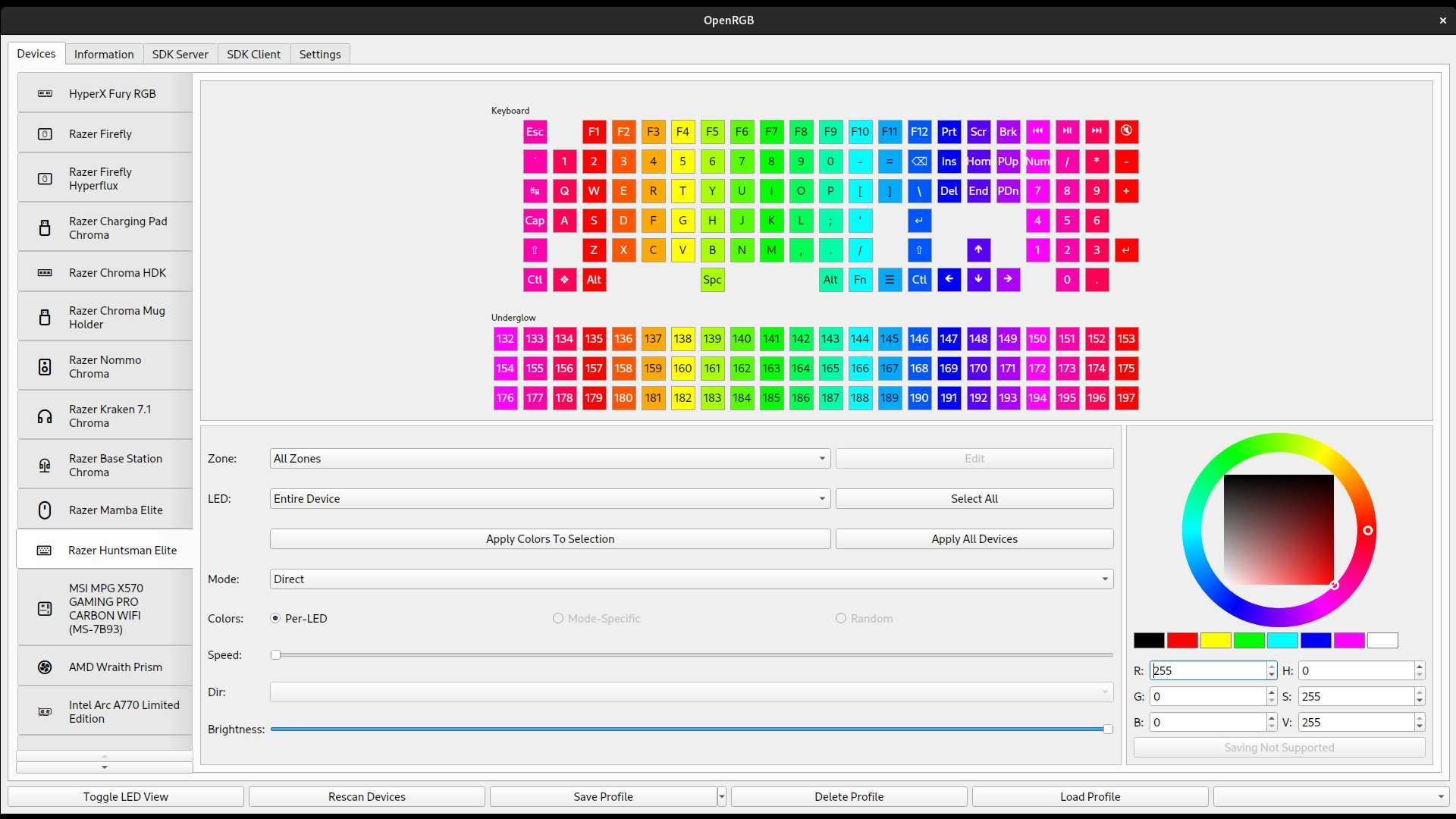
OpenRGB user interface

Control RGB without wasting system resources

Lightweight User Interface

OpenRGB keeps it simple with a lightweight user interface that doesn't waste background resources with excessive custom images and styles. It is light on both RAM and CPU usage, so your system can continue to shine without cutting into your gaming or productivity performance.
OpenRGB rules them all

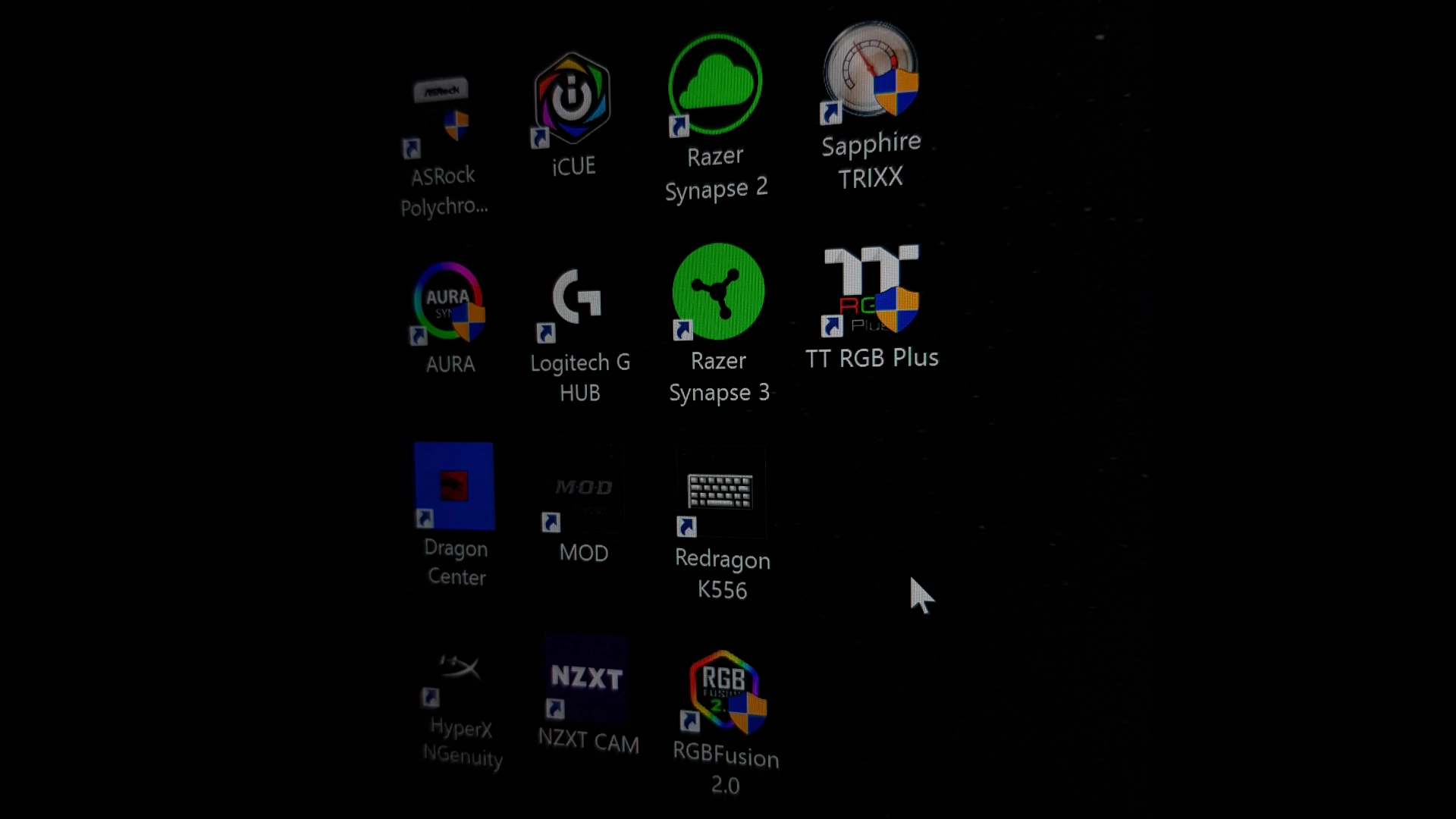
Control RGB from a single app

Eliminate Bloatware

If you have RGB devices from many different manufacturers, you will likely have many different programs installed to control all of your devices. These programs do not sync with each other, and they all compete for your system resources. OpenRGB aims to replace every single piece of proprietary RGB software with one lightweight app.

OpenRGB is open source software

Contribute your RGB devices

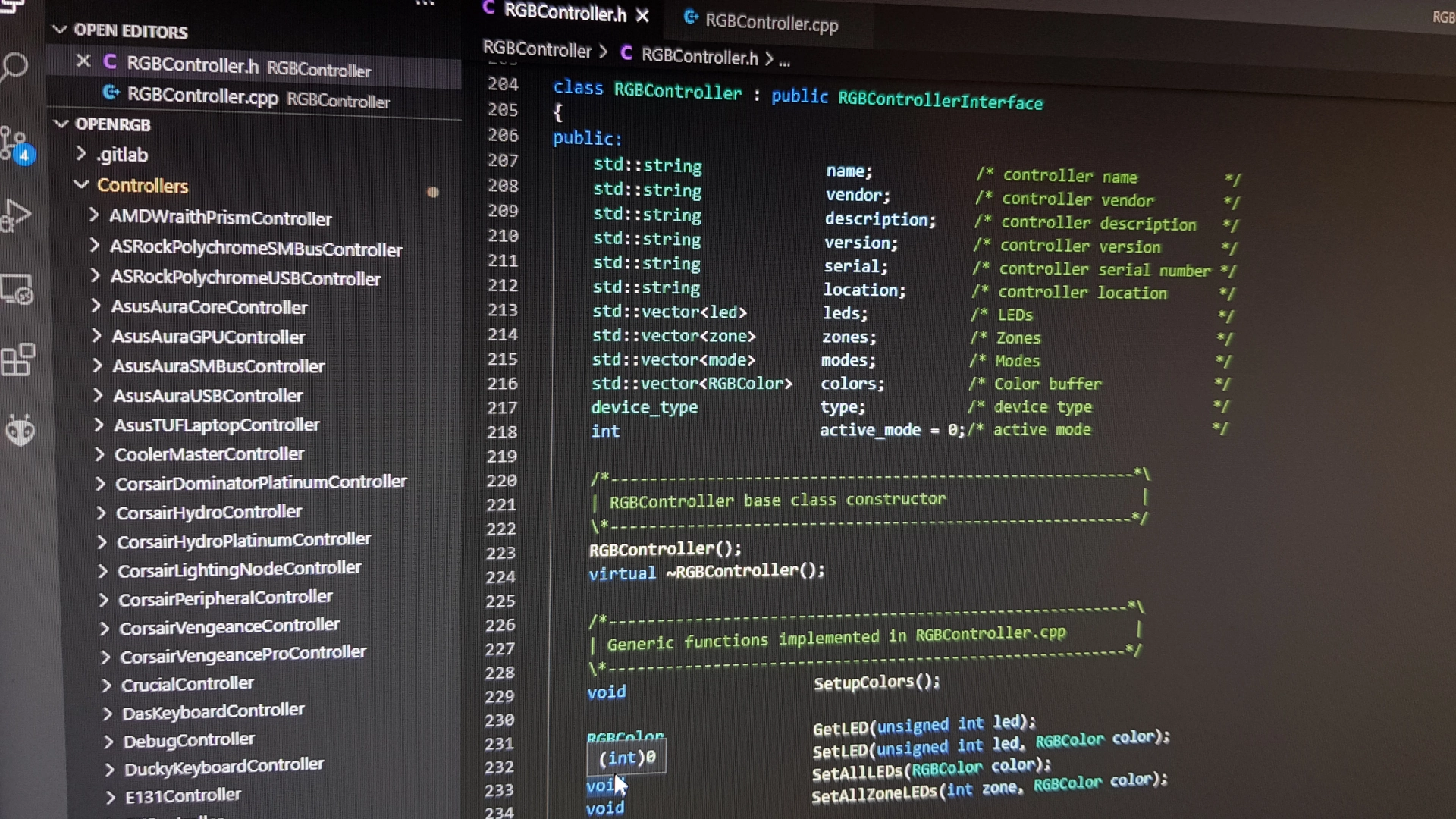
Open Source

OpenRGB is free and open source software under the GNU General Public License version 2. This means anyone is free to view and modify the code. If you know C++, you can add your own device with our flexible RGB hardware abstraction layer. Being open source means more devices are constantly being added!


Check out the source code on GitLab
OpenRGB is Cross-Platform

Control RGB on Windows, Linux, and MacOS

Cross-Platform

OpenRGB runs on Windows, Linux and MacOS. No longer is RGB control a Windows-exclusive feature! OpenRGB has been tested on X86, X86_64, ARM32, and ARM64 processors including ARM mini-PCs such as the Raspberry Pi.

Chudai Jav Meaning 【DIRECT】

Idols sell more than songs; they sell "growth." Fans pay to watch a 16-year-old struggle to hit a high note for six months until they finally nail it. This concept of seichō (growth) turns performers into living manga protagonists.

That wall has finally crumbled. With Alice in Borderland , First Love , and the sudden global resurgence of City Pop (thanks to YouTube algorithms), Japan realized that the world will pay for authenticity. They don't need to "Westernize" their content; they just need to subtitle it. The Takeaway The Japanese entertainment industry is not a monolith of kawaii culture. It is a complex machine that runs on contradiction: It is ruthlessly corporate yet deeply artistic. It is reserved in public yet explosive in fiction. It demands perfection from its stars yet worships the amateur’s struggle. chudai jav meaning

This is distinctly Japanese. The performers practice kenson (humility). In the West, a comedian protects their ego. In Japan, the ego is the sacrifice. The willingness to look absolutely ridiculous for 30 seconds of laughter is seen as the highest form of social intelligence. For decades, Japan’s entertainment industry suffered from Galapagos Syndrome —evolving in isolation, ignoring global streaming trends. They refused to license music to Spotify, kept DVD region locks, and ignored subtitles. Idols sell more than songs; they sell "growth

Beyond the Screens and Scripts: Why the Japanese Entertainment Industry Is a Cultural Powerhouse With Alice in Borderland , First Love ,