Do you have a minute? Get your cybersecurity score for your organization.

Google Sites Unblocked Youtube Online

At first glance, Google Sites is a humble tool. It is a free, drag-and-drop website builder designed for internal wikis, class portals, or team project hubs. It is not flashy, and it lacks the robust features of WordPress or Wix. However, its primary superpower is its domain: . In virtually every school or office, Google’s entire suite—Drive, Docs, Classroom, and Sites—is whitelisted. Blocking Google would halt collaborative work, email (Gmail), and file storage. Consequently, network administrators walk a tightrope; they must allow Google’s core infrastructure while blocking specific "distracting" sub-services like YouTube.

However, the "Google Sites unblocked YouTube" phenomenon is not merely a technical hack; it is a cultural artifact. It represents the ingenuity of digital natives who understand that rules are written in code, and code can be outmaneuvered. It also poses a philosophical question: Is blocking YouTube effective? If students can access the same video content through a Google Site, the firewall creates an illusion of security rather than real restriction. The only true solution is pedagogical—teaching self-regulation—rather than technological.

Furthermore, the rise of this practice highlights the social and administrative response to digital restriction. Administrators often fight back by deploying "SSL inspection" or "content filtering" that scans the payload of HTTPS packets, but this is resource-intensive and raises privacy concerns. Alternatively, some IT departments block the specific embed URLs associated with YouTube, only to find that Google updates these pathways frequently. The arms race continues, but Google Sites remains resilient because it is a core service. Blocking it entirely would disrupt the creation of legitimate educational websites, making it a non-starter for most schools.

In conclusion, Google Sites serves as an accidental Trojan horse in the world of internet filtering. By leveraging the trust granted to Google’s core domain, users can bypass restrictions on YouTube with astonishing ease. This practice underscores a simple truth of the digital age: any system that allows collaboration will have loopholes, and the most powerful unblocking tool is not a VPN or a proxy, but the very platform built for school projects. As long as Google Sites remains a trusted tool for education, it will remain the quiet gateway to a thousand unblocked videos.

This is where the loophole appears. Google Sites allows users to embed content from other Google services natively. If you create a Google Site, you can insert a YouTube video directly into the page using the built-in "Insert" menu. The video does not load as a separate tab at youtube.com ; instead, it loads as an embedded <iframe> served from sites.google.com . To the firewall, a request to a Google Site looks identical to a request for a homework document. It is encrypted, trusted, and passes straight through. The student clicks play, and the video streams seamlessly, not from YouTube’s blocked domain, but from the unblocked domain of Google Sites.

In the modern digital ecosystem, particularly within educational and corporate environments, network restrictions are a fact of life. Firewalls are erected to block distracting websites like YouTube, ostensibly to keep productivity high and bandwidth usage low. Yet, for the tech-savvy student or employee, the cat-and-mouse game of bypassing these restrictions is constant. Among the most elegant and surprising tools in this battle is a seemingly mundane platform: Google Sites . The phrase “Google Sites unblocked YouTube” has become a quiet mantra for those who understand a fundamental loophole of web filtering: you cannot block the host without breaking the entire internet.

The implications of this are profound for institutional network security. It reveals a critical vulnerability in the "allowlist" approach to web filtering. While a firewall can easily block youtube.com and ytimg.com (the image server), it cannot block the underlying video stream once it is proxied through a trusted domain without also breaking Google Drive’s video playback or Google Photos. Clever users exploit this by creating private, unlisted Google Sites pages that function as personal video aggregators. A student can copy the embed code from a popular YouTube video, paste it into a new Site, and within minutes, they have created a backdoor streaming portal.

icon Book Free Consultation

Google Sites Unblocked Youtube Online

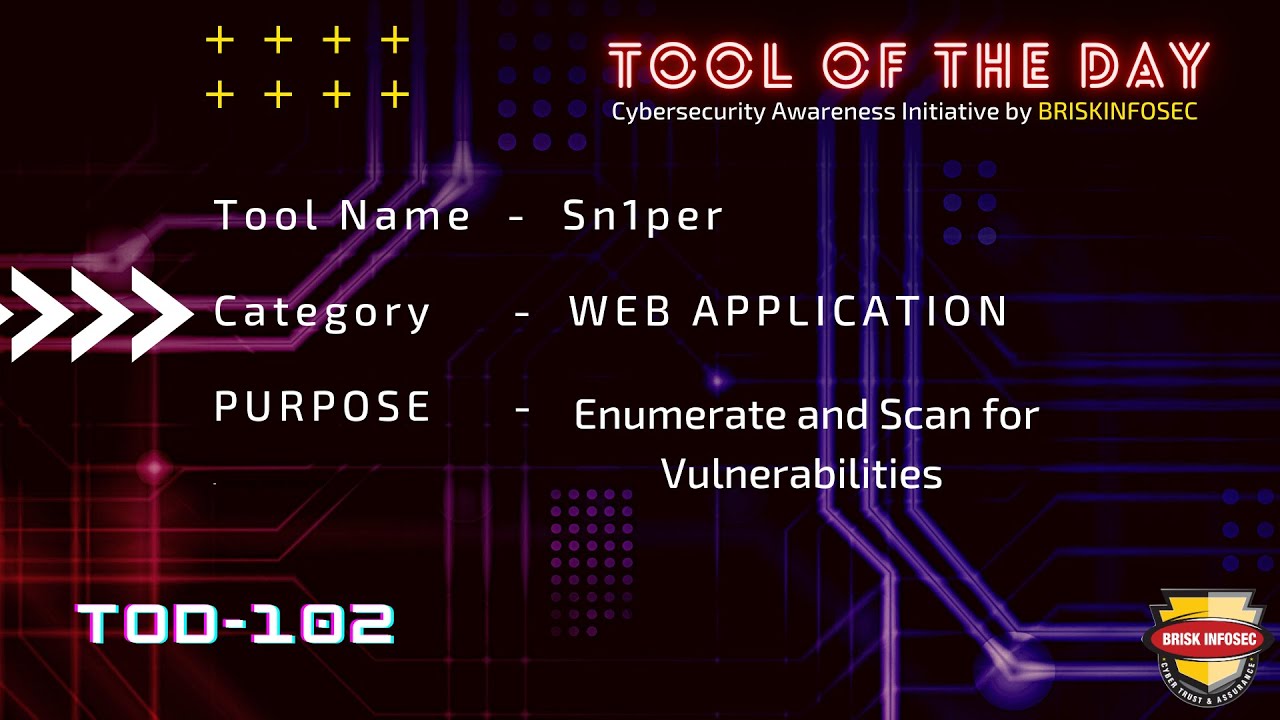
SN1PER Tool-Web App Vulnerability Scanner

Image

Sn1per Community Edition is an automated scanner that can be used during a penetration test to enumerate and scan for vulnerabilities. Sn1per Professional is Xero Security's premium reporting addon for Professional Penetration Testers, Bug Bounty Researchers and Corporate Security teams to manage large environments and pentest scopes.

Demo
Lock image

Installation:

Step 1: git clone https://github.com/1N3/Sn1per.git

Step 2: cd Sn1per

Step 3: ./install.sh

Step 4: ./Sn1per

Usage:

# ./Sn1per -t (Target.com)

Example:  ./Sn1per -t testsite.com

Commands And Usages

 [*] SPECIFY CUSTOM CONFIG FILE

 sniper -c /full/path/to/sniper.conf -t -m -w

 [*] NORMAL MODE + OSINT + RECON

 sniper -t -o -re

 [*] STEALTH MODE + OSINT + RECON

 sniper -t -m stealth -o -re

 [*] DISCOVER MODE

 sniper -t -m discover -w

 [*] SCAN ONLY SPECIFIC PORT

 sniper -t -m port -p

 [*] FULLPORTONLY SCAN MODE

 sniper -t -fp

 [*] WEB MODE - PORT 80 + 443 ONLY!

 sniper -t -m web

 [*] HTTP WEB PORT MODE

 sniper -t -m webporthttp -p

 [*] HTTPS WEB PORT MODE

 sniper -t -m webporthttps -p

 [*] HTTP WEBSCAN MODE

 sniper -t -m webscan

 [*] ENABLE BRUTEFORCE

 sniper -t -b

 [*] AIRSTRIKE MODE

 sniper -f targets.txt -m airstrike

 [*] NUKE MODE WITH TARGET LIST, BRUTEFORCE ENABLED, FULLPORTSCAN ENABLED, OSINT ENABLED, RECON ENABLED, WORKSPACE & LOOT ENABLED

 sniper -f targets.txt -m nuke -w

 [*] MASS PORT SCAN MODE

 sniper -f targets.txt -m massportscan -w

 [*] MASS WEB SCAN MODE

 sniper -f targets.txt -m massweb -w

 [*] MASS WEBSCAN SCAN MODE

 sniper -f targets.txt -m masswebscan -w

 [*] MASS VULN SCAN MODE

 sniper -f targets.txt -m massvulnscan -w

 [*] PORT SCAN MODE

 sniper -t -m port -p

 [*] LIST WORKSPACES

 sniper --list

 [*] DELETE WORKSPACE

 sniper -w -d

 [*] DELETE HOST FROM WORKSPACE

 sniper -w -t -dh

 [*] GET SNIPER SCAN STATUS

 sniper --status

 [*] LOOT REIMPORT FUNCTION

 sniper -w --reimport

 [*] LOOT REIMPORTALL FUNCTION

 sniper -w --reimportall

 [*] LOOT REIMPORT FUNCTION

 sniper -w --reload

 [*] LOOT EXPORT FUNCTION

 sniper -w --export

 [*] SCHEDULED SCANS

 sniper -w -s daily|weekly|monthly

 [*] USE A CUSTOM CONFIG

 sniper -c /path/to/sniper.conf -t -w

 [*] UPDATE SNIPER

 sniper -u|--update

Sn1per Features

  • Automatically collects basic recon (ie. whois, ping, DNS, etc.)

  •  Automatically launches Google hacking queries against a target domain

  •  Automatically enumerates open ports via NMap port scanning

  •  Automatically exploit common vulnerabilities

  •  Automatically brute forces sub-domains, gathers DNS info and checks for zone transfers google sites unblocked youtube

  •  Automatically checks for sub-domain hijacking

  •  Automatically runs targeted NMap scripts against open ports

  •  Automatically runs targeted Metasploit scan and exploit modules

  •  Automatically scans all web applications for common vulnerabilities

  •  Automatically brute forces ALL open services

  •  Automatically test for anonymous FTP access

  •  Automatically runs WPScan, Arachni and Nikto for all web services

  •  Automatically enumerates NFS shares

  •  Automatically test for anonymous LDAP access

  •  Automatically enumerate SSL/TLS ciphers, protocols and vulnerabilities

  •  Automatically enumerate SNMP community strings, services and users

  •  Automatically list SMB users and shares, check for NULL sessions and exploit MS08-067

  •  Automatically tests for open X11 servers

  •  Performs high level enumeration of multiple hosts and subnets

  •  Automatically integrates with Metasploit Pro, MSFConsole and Zenmap for reporting

  •  Automatically gathers screenshots of all web sites

  •  Create individual workspaces to store all scan output

  •  Scheduled scans (https://github.com/1N3/Sn1per/wiki/Scheduled-Scans)

  •  Slack API integration (https://github.com/1N3/Sn1per/wiki/Slack-API-Integration)

  •  Hunter.io API integration (https://github.com/1N3/Sn1per/wiki/Hunter.io-API-Integration)

  •  OpenVAS API integration (https://github.com/1N3/Sn1per/wiki/OpenVAS-Integration)

  •  Burpsuite Professional 2.x integration (https://github.com/1N3/Sn1per/wiki/Burpsuite-Professional-2.x-Integration)

  •  Shodan API integration (https://github.com/1N3/Sn1per/wiki/Shodan-Integration) At first glance, Google Sites is a humble tool

  •  Censys API integration (https://github.com/1N3/Sn1per/wiki/Censys-API-Integration)

  •  Metasploit integration (https://github.com/1N3/Sn1per/wiki/Metasploit-Integration)

Image

Discover the Latest Cyber Threats - Stay Ahead of the Curve

captcha-img