Vietnam Colony Tamil -

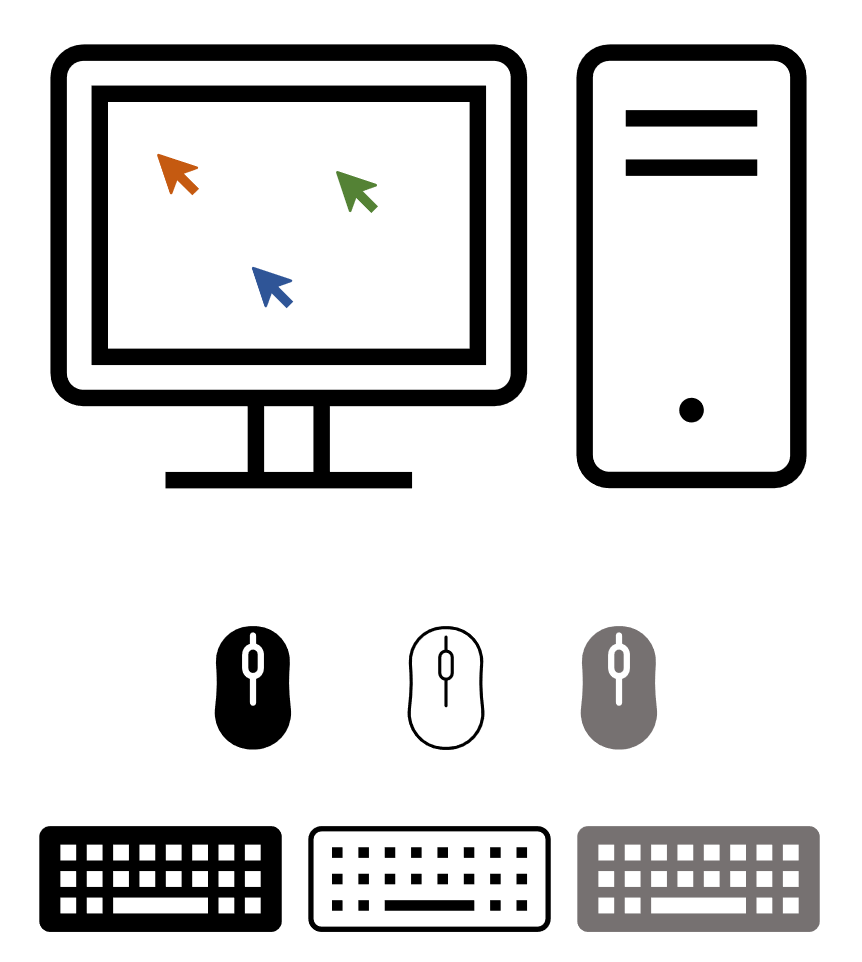
Each user gets their own cursor and can simultaneously work on the same Windows desktop. Configure each individual pointer device (acceleration, cursor theme, wheel and button behaviour etc) independently. Collaboration was never so easy!

Download (Or read some more on what features we have)
December 2025 - New Beta Release
RustDesk + MouseMux = Multi-user Remote Desktop

Major updates to MouseMux! We now support RustDesk for multi-user remote desktop collaboration. This BETA includes new collaborative apps (Multi Paint, Team Vote, Whiteboard), smarter keyboard remapping, performance optimizations with cursor caching and high-DPI mouse support, a new Web SDK, and many bug fixes. As this is a beta release, you may encounter small inconsistencies. Your feedback is highly appreciated!

Simple collaboration

Our goal is to make working together as intuitive and simple as possible. Just add some extra pointer devices (mice, pens, touchpads) and (optional) keyboards and MouseMux will transform your PC into a realtime multi-user system. Each user can work in their own document, annotate on the screen, drag or resize windows or interact with different programs - all at the same time on the same windows desktop. Simple annotations allow each user to highlight parts of the screen. Concurrently interacting with different apps on the same desktop creates new and interesting ways to work together; collaborate by taking over certain actions, type together, draw together - all at the same time without interfering others.

$features.alt

For teams

Use it for pair programming, collaborative designing, in the class or meeting room (so all can interact and have a presence on the screen). Join forces on editing documents, or in the control room so each operator can see where the others are.

For individuals

Use it to customize your mouse (or pen, touch or tablet) interaction; custom acceleration, assigned buttons, themes or wheel behavior - for each individual pointer device. Let any pointer device act as any other (mouse, pen, touch, etc). Record macro's and play them back to automate tasks, even in a multi cursor scenario. Having a cursor for each mouse means you can quickly interact with individual applications because cursors can be localized or dedicated to one program - the restriction of moving one cursor all over the screen and refocusing on a specific application is lifted. The screen's realastate becomes much more manageable.

For industry

In Industrial processes including manufacturing, process control, power generation, fabrication, and refining, and facility processes, including buildings, airports, ships, and space stations where multiple operators work in SCADA like situations safe multiuser operation is vital. MouseMux can manage individual users and can store historical data of any interaction. Assigning a supervisor and overriding actions by other operators is now possible - SCADA programs can integrate with our SDK so true simultaneous interaction becomes possible.

Vietnam Colony Tamil -

The Chettiars were the financial engines of colonial Vietnam. Their modus operandi was simple yet transformative: they would lend money to Vietnamese rice millers, landlords, and small farmers at interest rates more accessible than French banks, while also financing the rice trade itself. By the early 20th century, dozens of Chettiar firms lined specific streets in Saigon’s Chinatown, Chợ Lớn, operating out of unassuming shophouses. They introduced a proto-modern financial system—using hundi (promissory notes) and clan-based trust—that monetized the Delta's agricultural economy. Without Tamil capital, the explosion of Vietnamese rice exports to Europe and China would have been severely hampered. The Tamil merchant, in his simple white veshti , became an invisible but essential pillar of Indochina’s colonial prosperity.

The fate of the Tamil community in Vietnam was sealed by the cataclysms of the 20th century. The Great Depression of the 1930s, which caused a catastrophic crash in rice prices, led to mass defaults on Chettiar loans, ruining many firms. World War II and the Japanese occupation cut off all links to India. The final blow came with the First Indochina War (1946–54) and the subsequent partition of Vietnam. As the French withdrew, the anti-colonial nationalist sentiment, led by the Viet Minh, viewed foreign financiers—especially those seen as collaborators with the colonial regime—with deep suspicion. By 1956, under the government of Ngo Dinh Diem in the South, most Chettiar and other Tamil businesses were either forced to leave, had their assets seized, or simply wound down. The community that had once lubricated the delta’s economy dissolved, its members returning to India or resettling in other Southeast Asian hubs like Singapore. vietnam colony tamil

In conclusion, the history of Tamils in colonial Vietnam is a story of economic impact without cultural footprint. They were the quintessential "invisible migrants"—indispensable to the colonial machinery yet remaining socially aloof, politically vulnerable, and temporally limited. Their legacy is not one of statues or street names, but of a historical lesson: that diaspora communities can shape empires not through armies or administration, but through ledgers and loans. The forgotten Tamil sojourners of Vietnam remind us that the capillaries of global capitalism in the colonial era were often traced by humble, itinerant merchants whose sacrifices underwrote prosperity for others, while they themselves remained permanent outsiders, destined to fade back into the sea from which they came. The Chettiars were the financial engines of colonial Vietnam

The arrival of Tamils in Vietnam was an indirect consequence of the Franco-British imperial rivalry in India. By the mid-19th century, France had lost its primary Indian ambitions but retained small trading posts, most notably Pondicherry. When France embarked on the conquest of Cochinchina (southern Vietnam) in the 1860s, it looked to its existing Indian possessions for administrative templates and, crucially, for a class of financiers. The Tamil Nattukottai Chettiars , renowned across the British Empire for their sophisticated banking and money-lending networks, were the perfect fit. Lacking a robust Western banking system in its nascent colony, the French administration tacitly encouraged Chettiar firms to establish themselves in Saigon (now Ho Chi Minh City) and the rice-rich Mekong Delta. The fate of the Tamil community in Vietnam

When one thinks of the Tamil diaspora, the mind naturally turns to the plantations of Malaysia, the rubber estates of Singapore, or the administrative offices of Ceylon. Vietnam, a country shaped by millennia of Chinese influence and a century of French rule, rarely features in this narrative. Yet, beneath the surface of Vietnamese colonial history lies the faint but significant imprint of a Tamil community. The story of "Vietnam colony Tamil" is not one of mass migration or cultural conquest, but of a small, strategic, and ultimately transient sojourner community—primarily Chettiar merchants and Puducherry (Pondicherry) traders—whose economic role and ultimate disappearance offer a unique lens through which to view the complexities of French colonialism in Southeast Asia.

FAQ

The Chettiars were the financial engines of colonial Vietnam. Their modus operandi was simple yet transformative: they would lend money to Vietnamese rice millers, landlords, and small farmers at interest rates more accessible than French banks, while also financing the rice trade itself. By the early 20th century, dozens of Chettiar firms lined specific streets in Saigon’s Chinatown, Chợ Lớn, operating out of unassuming shophouses. They introduced a proto-modern financial system—using hundi (promissory notes) and clan-based trust—that monetized the Delta's agricultural economy. Without Tamil capital, the explosion of Vietnamese rice exports to Europe and China would have been severely hampered. The Tamil merchant, in his simple white veshti , became an invisible but essential pillar of Indochina’s colonial prosperity.

The fate of the Tamil community in Vietnam was sealed by the cataclysms of the 20th century. The Great Depression of the 1930s, which caused a catastrophic crash in rice prices, led to mass defaults on Chettiar loans, ruining many firms. World War II and the Japanese occupation cut off all links to India. The final blow came with the First Indochina War (1946–54) and the subsequent partition of Vietnam. As the French withdrew, the anti-colonial nationalist sentiment, led by the Viet Minh, viewed foreign financiers—especially those seen as collaborators with the colonial regime—with deep suspicion. By 1956, under the government of Ngo Dinh Diem in the South, most Chettiar and other Tamil businesses were either forced to leave, had their assets seized, or simply wound down. The community that had once lubricated the delta’s economy dissolved, its members returning to India or resettling in other Southeast Asian hubs like Singapore.

In conclusion, the history of Tamils in colonial Vietnam is a story of economic impact without cultural footprint. They were the quintessential "invisible migrants"—indispensable to the colonial machinery yet remaining socially aloof, politically vulnerable, and temporally limited. Their legacy is not one of statues or street names, but of a historical lesson: that diaspora communities can shape empires not through armies or administration, but through ledgers and loans. The forgotten Tamil sojourners of Vietnam remind us that the capillaries of global capitalism in the colonial era were often traced by humble, itinerant merchants whose sacrifices underwrote prosperity for others, while they themselves remained permanent outsiders, destined to fade back into the sea from which they came.

The arrival of Tamils in Vietnam was an indirect consequence of the Franco-British imperial rivalry in India. By the mid-19th century, France had lost its primary Indian ambitions but retained small trading posts, most notably Pondicherry. When France embarked on the conquest of Cochinchina (southern Vietnam) in the 1860s, it looked to its existing Indian possessions for administrative templates and, crucially, for a class of financiers. The Tamil Nattukottai Chettiars , renowned across the British Empire for their sophisticated banking and money-lending networks, were the perfect fit. Lacking a robust Western banking system in its nascent colony, the French administration tacitly encouraged Chettiar firms to establish themselves in Saigon (now Ho Chi Minh City) and the rice-rich Mekong Delta.

When one thinks of the Tamil diaspora, the mind naturally turns to the plantations of Malaysia, the rubber estates of Singapore, or the administrative offices of Ceylon. Vietnam, a country shaped by millennia of Chinese influence and a century of French rule, rarely features in this narrative. Yet, beneath the surface of Vietnamese colonial history lies the faint but significant imprint of a Tamil community. The story of "Vietnam colony Tamil" is not one of mass migration or cultural conquest, but of a small, strategic, and ultimately transient sojourner community—primarily Chettiar merchants and Puducherry (Pondicherry) traders—whose economic role and ultimate disappearance offer a unique lens through which to view the complexities of French colonialism in Southeast Asia.

These companies, among other, use & trust MouseMux

Proudly serving our clients! Let us know if you need a customized/branded version for specific corporate or industrial use.

ABB - Global leader in industrial automation and power technologies
BMW - Premium automotive manufacturer
UFA - University of Alberta
NHS - National Health Service UK
ROAV7 - Regional Operations Air Vehicle 7
RUAG - Swiss aerospace and defense technology company
Micronav - Navigation and positioning technology solutions
Amgen - Biotechnology company
Avio Aero - Aerospace manufacturing company
Bosch - Global engineering and technology company
Schiphol - Amsterdam Airport Schiphol
Vector - Embedded systems and software tools provider

Contact

Address
Moreelsepark 65, 3511 EP Utrecht, the Netherlands

Love MouseMux? Join Us!

We're looking for a passionate MouseMux enthusiast to help spread the word! If you love creating content (videos, tutorials, demos), engaging with communities, or just can't stop talking about multi-cursor collaboration, we want to hear from you.

We love people who think outside the box and can spot new opportunities where MouseMux could flourish - whether that's creative use cases, new markets, or ways to reach people who haven't discovered multi-cursor collaboration yet.